 "navigation"


02
Content
Hard window treatments — aluminium venetian blinds, PVC shutters, wooden slats — offer privacy and light control, but they do so without contributing warmth, softness, or acoustic comfort to a room. Fabric blinds and shades address all three. A woven roller shade in a linen weave absorbs sound rather than reflecting it, adds visual texture that painted walls and hard furniture cannot provide, and creates a quality of diffused light that flat blinds can never replicate. This combination of functional performance and decorative richness explains why fabric remains the dominant material category in residential window treatment specification worldwide.
The term "fabric blinds and shades" covers a wide product family. At one end sit simple flat-fold roller shades in a single layer of coated polyester; at the other, hand-stitched Roman shades in hand-loomed silk with interlining and blackout lining. Between those extremes lies an enormous range of products differentiated by operating mechanism, fabric weight and openness factor, light transmission characteristics, and design style. Understanding these distinctions is the essential first step before any purchasing decision is made.
Roller shades are the simplest and most widely specified fabric window treatment. A single layer of fabric winds around an aluminium or steel tube mounted at the top of the window frame. The fabric drops in a flat plane when unrolled and retracts cleanly into a compact roll when raised. Because the design involves no pleating or folding, the fabric is visible in its full flat state when the shade is down — making pattern, texture, and colour the primary design variables. Roller shades are available in fabrics ranging from 1% openness factor (near-blackout) to 14% openness factor (open weave that admits significant daylight while reducing glare), and can be specified with an additional blackout lining roller operating on the same hardware for dual light-control capability.
Roman shades fold into horizontal pleats as they are raised, creating a stacked fabric panel at the head of the window when fully open. When lowered, they present an unbroken flat panel of fabric — or, in relaxed Roman variants, a gently arched lower hem that pools slightly at the base. Romans are the most design-intensive of the common shade types: they require pattern matching across the panel width, precise pleat spacing (typically 20–25 cm between fold positions), and interlining to give the fabric sufficient body to fold crisply. Roman shades work particularly well in living rooms and bedrooms where the window is a design feature in its own right, and they are the preferred vehicle for showcasing premium or artisan fabrics that deserve to be seen flat rather than pleated.
Cellular shades are constructed from fabric formed into hexagonal cells that stack vertically when the shade is raised. The cells trap air, providing meaningful thermal insulation — single-cell construction reduces heat transfer moderately, while double and triple-cell constructions offer progressively greater insulation performance, making them relevant in climates with significant seasonal temperature variation. The fabric used in cellular shades is typically a non-woven polyester in light-filtering or blackout weights, available in a wide colour palette but with limited texture variation compared to woven fabrics. Their clean, architectural appearance suits contemporary and minimalist interiors particularly well.
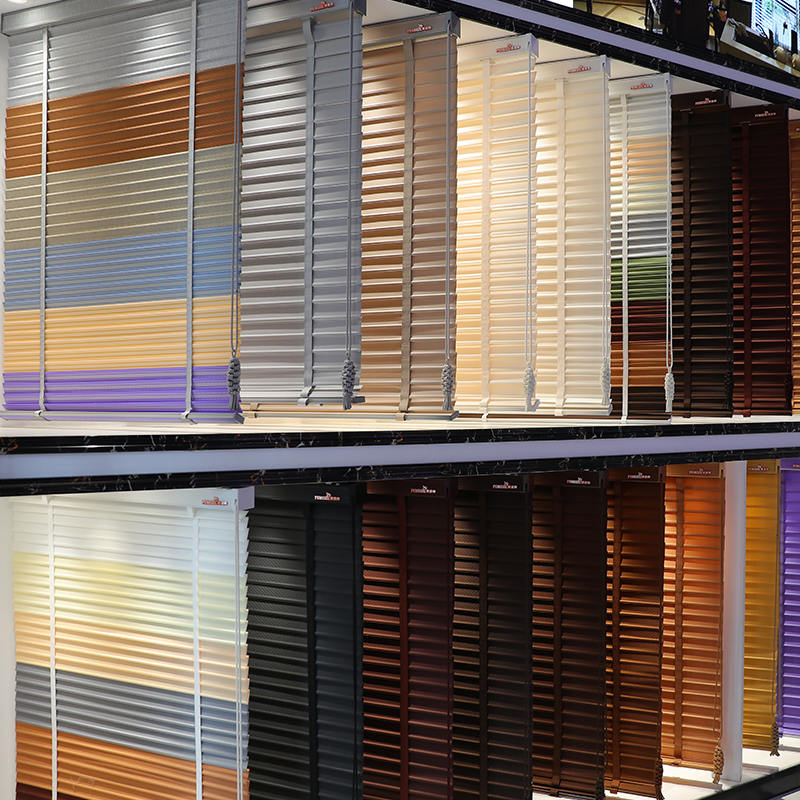
Woven wood shades — also sold as bamboo, matchstick, or natural fiber shades — are constructed from grasses, reeds, jute, seagrass, or thin bamboo strips woven together with cotton or polyester threading. They roll up like a standard roller shade but present a textured, organic surface completely unlike any synthetic fabric product. Light filters through the weave gaps to create dappled, warm-toned illumination that is distinctive and difficult to achieve with any other window treatment material. Because the natural fibers are not waterproof, woven wood shades are generally suitable for living spaces and bedrooms rather than bathrooms or kitchens with high moisture levels. Adding a fabric lining to the back improves privacy and light control while retaining the natural texture visible from inside the room.
Sheer shades — sometimes called zebra blinds or banded shades — alternate horizontal bands of sheer and solid fabric that can be aligned to either diffuse light through the sheer bands or block it through the opaque bands. This dual-functionality makes them one of the most versatile products in the category: during the day, aligning the sheer bands provides soft, diffused daylight with an outside view; rotating the fabric to align the solid bands provides privacy and reduced light transmission without fully closing the shade. The operating mechanism is a roller system, making them as simple to use as a standard roller shade while offering significantly more light control flexibility.
The openness factor of a shade fabric — expressed as a percentage of the total fabric area that consists of open gaps between yarns — is the most technically precise way to specify light transmission. Understanding openness factor prevents the common mistake of selecting a fabric based on appearance in a showroom under artificial light, only to find it transmits far more or less light than expected in the installed window.
| Openness Factor | Light Transmission | Privacy Level | Best Use |
| 0% (Blackout) | None | Complete | Bedrooms, media rooms |
| 1–3% | Very low | High | Bedrooms, street-facing rooms |
| 3–6% | Low–moderate | Good daytime privacy | Living rooms, offices |
| 6–10% | Moderate | Glare reduction only | Views important, glare control needed |
| 10–14% | High | Minimal | Bright rooms, sun screening only |
Fabric colour also influences light transmission independently of openness factor. Lighter fabric colours transmit more light through their fibers than darker colours at the same openness percentage — a white 3% openness shade will allow noticeably more ambient light into a room than a charcoal shade of the same specification. If maximum light blocking is the goal, specify both a low openness factor and a dark or reflective face colour, or opt for a purpose-designed blackout coating on the fabric back.
Beyond light control, the tactile and visual texture of the shade fabric is the most significant contributor to the room's design character. Fabric texture interacts with natural and artificial light throughout the day, meaning the appearance of a shade changes continuously — a flat-woven linen shade looks entirely different in morning raking light than in the flat afternoon sun, giving the room a dynamic quality that painted walls and hard surfaces cannot provide.
The functional requirements of each room should drive the initial specification, with design choices made within those parameters. Bedrooms require effective light blocking and privacy — this directs the specification toward blackout or low-openness-factor fabrics, with the design choice then being made from within that functional subset. Living rooms typically prioritise view preservation and natural light, directing the specification toward open-weave solar shades or light-filtering Romans in neutral linen or sheer fabrics. Home offices need glare control to reduce screen reflections without eliminating daylight — a 3–5% openness factor roller shade in a mid-tone colour is the typical specification that balances these competing demands.
Installation method also affects the design outcome. Inside-mount shades sit within the window recess, creating a clean, tailored appearance that emphasises the window architecture and works well with casement and sash windows. Outside-mount shades are fixed to the wall or ceiling above the window frame, allowing the shade to extend beyond the window opening on each side — this makes windows appear wider and taller than they actually are, and is the preferred installation for smaller windows in rooms where a more generous window proportion is desired. Ceiling-to-floor outside mounts create a dramatic, hotel-like quality in rooms with high ceilings, particularly when the shade fabric has a strong vertical drop and minimal visible hardware.
The operating system is the least visible but arguably most important aspect of day-to-day satisfaction with fabric blinds and shades. Corded systems are the most economical but are subject to safety regulations restricting their use in homes with young children in many countries. Cordless spring-tension systems offer a clean appearance and child-safe operation for smaller, lighter shades. Chain-driven roller and Roman shade systems provide reliable operation for heavier or wider panels where spring tension alone is insufficient.
Motorised fabric shades — battery-powered or hard-wired — have moved from a luxury specification to a near-mainstream option as component costs have decreased and smart home platforms have expanded. A motorised roller shade integrated with a home automation system can be programmed to adjust position based on time of day, outdoor light levels, or temperature sensors — closing automatically during peak afternoon sun to reduce solar gain and reopening as the sun moves. For rooms with multiple windows, motorised operation transforms what would otherwise be a cumbersome manual adjustment process into a single scene-controlled action. When specifying motorised shades, ensure the selected fabric is compatible with the motor's rated lift capacity and that the roller tube diameter is sufficient for the fabric weight to wind evenly without tracking or telescoping.