 "navigation"


02
Content
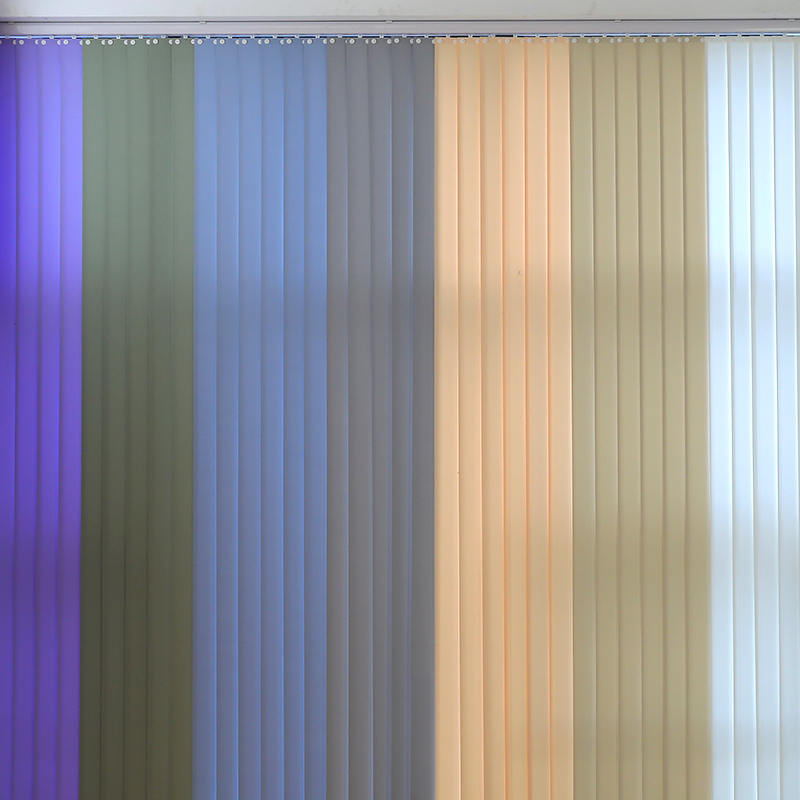
Vertical fabric blinds consist of individual fabric slats — typically 89mm or 127mm wide — suspended from a headrail track and arranged side by side to cover a window or door opening. Unlike horizontal blinds that stack upward when raised, vertical blinds draw to one side or split to both sides, making them especially well-suited to wide windows, sliding glass doors, and patio doors where a horizontal blind would require an impractically large stack height. The fabric construction sets them apart from the older PVC or vinyl vertical blind, offering a softer aesthetic, better light diffusion, and a wider range of texture and opacity options that integrate more naturally into residential interiors.
Each slat hangs from a carrier inside the headrail and rotates 180 degrees, allowing the user to control the angle of incoming light with precision. When fully closed, the slats overlap slightly to eliminate gaps and provide a more complete block of light or privacy. When rotated to 90 degrees, the slats align parallel to the window, allowing unobstructed views and maximum daylight. This rotational control, combined with the ability to draw all slats fully to the side, gives vertical fabric blinds a level of light management flexibility that many other window treatments cannot match at comparable price points.
The fabric used in vertical blind slats determines how the blinds perform in terms of light filtering, privacy, and longevity. Choosing the wrong fabric type for the application is one of the most common mistakes buyers make, resulting in either too much light penetration or an unnecessarily dark room.
Sheer fabric slats allow diffused natural light to pass through while softening the direct glare of sunlight. They provide daytime privacy — obscuring the interior from outside view — while maintaining a bright, open feel inside the room. Sheer vertical blinds are a strong choice for living rooms, dining areas, and any space where natural light is valued but direct sun needs to be managed. They are not suitable for bedrooms where complete darkness is required, as they do not block light effectively at night when interior lights are on.
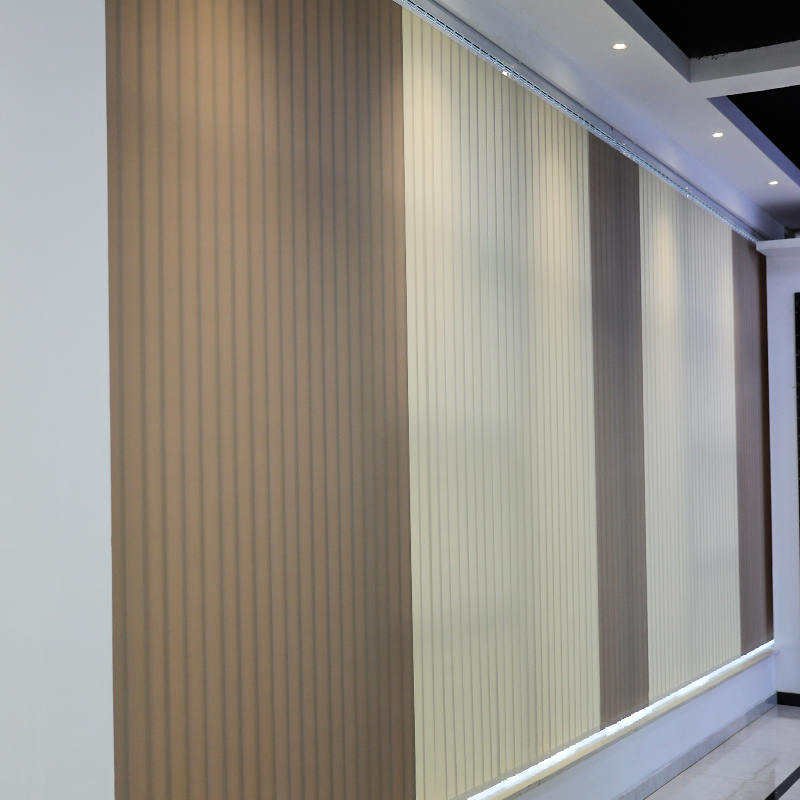
Dim-out fabrics sit in the middle ground between sheer and blackout. They reduce incoming light significantly — typically by 70% to 90% — without eliminating it entirely. The result is a softer, ambient light that eliminates glare and harsh shadows while keeping the room from feeling enclosed. These fabrics are the most versatile option for general living spaces, home offices, and children's rooms where some light reduction is useful during the day and a degree of nighttime privacy is needed.
Blackout vertical blind fabrics use a coated or layered construction to block virtually all light transmission. They are manufactured with an opaque backing — typically acrylic foam or a triple-weave structure — that prevents light from passing through the slat itself. Blackout slats are the preferred choice for bedrooms, home theatres, and shift workers' accommodation where complete darkness is necessary during daylight hours. It's worth noting that even blackout slats will allow some light around the edges of the headrail and between slats unless the installation includes a close-fitting pelmet or side channels.
When selecting vertical fabric blinds, several practical features determine suitability for different rooms and usage patterns. The table below outlines the most relevant criteria and how different configurations compare.
| Feature | Sheer Fabric | Dim-Out Fabric | Blackout Fabric |
| Light transmission | High | Low to medium | Minimal |
| Daytime privacy | Good | Very good | Excellent |
| Nighttime privacy | Poor | Good | Excellent |
| Best room use | Living room, dining | Office, lounge, kids' room | Bedroom, home theatre |
| UV protection | Partial | High | Very high |
Accurate measurement is the single most critical step in ordering vertical fabric blinds. Unlike curtains, which have some tolerance for imprecision, vertical blinds are manufactured to exact dimensions and cannot be trimmed on site if the measurement is wrong. There are two installation approaches — inside the recess and outside the recess — and each requires a different measuring method.
For an inside recess installation, where the headrail fits within the window frame, measure the exact width of the recess at three points: top, middle, and bottom. Use the narrowest measurement and deduct 10mm to allow clearance for the headrail brackets and smooth operation of the slats. For the drop, measure from the top of the recess to the sill at both sides and use the shorter measurement, deducting a further 10mm to prevent the slats from dragging on the sill.
For an outside recess installation, where the headrail is mounted on the wall above or around the window frame, add at least 100mm to each side of the window width to ensure full coverage and prevent light bleed at the edges. The drop measurement should extend from the point where the bracket will be fixed — typically 100mm above the window frame — to the desired endpoint, whether that's the sill, below the sill, or the floor for a full-length installation on a patio door.
Vertical fabric blinds are available with several control mechanisms, and the right choice depends on the window height, the user's preferences, and household safety requirements — particularly where young children or pets are present.
One of the practical advantages of fabric vertical blinds over hard-slat alternatives is that individual slats can be removed from the headrail carriers for cleaning or replacement without disturbing the rest of the installation. Each slat clips into or slides out of its carrier in seconds, which makes targeted maintenance straightforward.
For routine dust removal, a vacuum cleaner with a soft brush attachment run along the length of the closed slats is the most effective and least disruptive method. The slat should be held gently at the bottom while vacuuming to prevent it from swinging and creasing. For spot cleaning of marks or stains, a damp cloth with a small amount of mild detergent applied gently to the affected area is sufficient for most fabric types. Avoid soaking the slat, as excessive moisture can cause the fabric to warp or the stiffener inside the slat to deform.
For deeper cleaning, many fabric vertical blind slats are machine-washable on a delicate or cold cycle, though this varies by fabric type and manufacturer. Always check the care label before washing. Slats should be washed individually rather than bundled together to avoid tangling, and should be re-hung on the carriers while still slightly damp to allow them to hang straight and dry without creasing. Blackout slats with coated or foam backings are generally not machine-washable and should be cleaned by hand only to preserve the integrity of the backing layer.
Vertical fabric blinds are not the right solution for every window, but they excel in specific scenarios where other treatments fall short. They are the most practical choice for sliding patio doors and wide bay windows because their side-draw operation clears the full opening without obstruction. Curtains on a patio door are prone to catching in the door mechanism; roller blinds on a wide window require multiple adjacent units that rarely align perfectly; but a single vertical blind track can span several metres without practical limitation.
They are also a strong choice for rental properties and commercial spaces because individual damaged slats can be replaced at low cost without replacing the entire installation. The headrail and operating mechanism typically outlast several sets of slats, making the long-term cost of ownership lower than equivalent roller or panel blinds. For anyone working within a defined budget who needs a clean, functional, and adaptable window covering for large openings, vertical fabric blinds consistently deliver practical value that more fashionable alternatives struggle to match at the same price point.