 "navigation"


02
Content
Bay windows are one of the most architecturally distinctive features a room can have — they project outward from the main wall, flood the interior with light from multiple angles, and create a generous sense of space. But that same structural complexity makes them one of the trickiest window types to dress effectively. Standard blinds designed for flat windows often cannot be fitted without modification, and choosing the wrong style can make a beautiful bay look awkward, cluttered, or poorly proportioned. This guide focuses specifically on the practical challenge of choosing and fitting blinds for bay windows, with a close look at horizontal fabric blinds and how they compare to other options across different bay configurations and interior styles.
Before selecting any blind, it is essential to understand the exact configuration of your bay, because the geometry directly determines which blind types are feasible, how they will need to be fitted, and what the final result will look like. Bay windows generally fall into three structural types, each presenting different challenges for blind installation.
A square or box bay has three flat sections meeting at 90-degree angles — a large central window flanked by two narrower side windows set perpendicular to the main wall. This is the most common configuration in Victorian and Edwardian terraced housing and is the most straightforward to fit, as each window section is independent and can take its own blind without complex angling. A canted bay, also called an angled bay, has side windows set at an angle — typically 45 degrees — rather than a right angle, which requires blinds on the side panels to be fitted at a corresponding angle and means there is less depth between the angled window face and the room. A bow window is a curved bay made up of four or more narrow window sections arranged in a gentle arc, where achieving a uniform look across all sections requires careful measurement and consistent blind specification.
Measuring each individual section of a bay separately — including the exact width at top and bottom, the height, and the projection depth — is critical before ordering any blind. Bay windows are frequently not perfectly square, and even small deviations of a few millimeters can cause blinds to bind, gap, or appear misaligned. Professional measurement is strongly recommended for bow bays and for any bay where the window frames are older and potentially out of true.
Horizontal fabric blinds — which include Roman blinds, woven wood blinds, and certain styles of panel or roller blinds with a fabric face — are particularly well suited to bay windows for several practical and aesthetic reasons. Unlike hard slatted blinds such as Venetians or wooden horizontals, fabric blinds have a softness and texture that complements the architectural character of a bay, which is often the most decorative element in a living room or bedroom. When three matching fabric blinds are fitted across the sections of a square bay, the visual effect is cohesive and intentional rather than repetitive or mechanical.
From a practical standpoint, fabric blinds are generally lighter than equivalent wooden or aluminium Venetian blinds, which reduces the structural load on the window frame fixings — an important consideration when fitting multiple blinds into older bay windows where the frame timber may be less robust than in modern construction. Fabric blinds also offer excellent light filtration options, from sheer weaves that diffuse direct sunlight while preserving the view, to blackout-lined Romans that provide full light block in bays that face east or west and receive strong morning or evening sun directly through the glass.
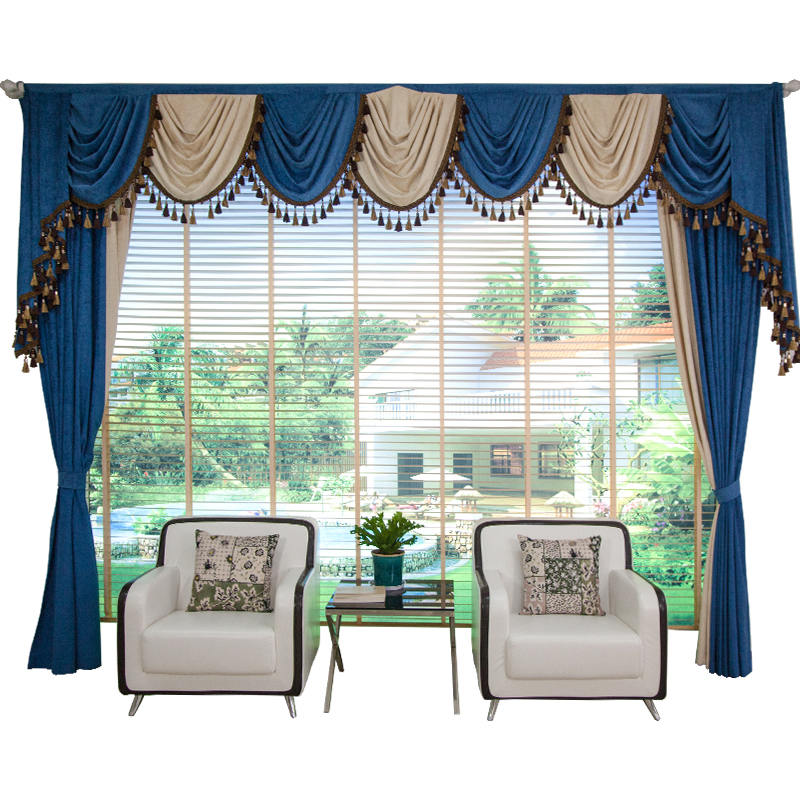
Roman blinds are the horizontal fabric blind most commonly chosen for bay windows, and with good reason. When raised, a Roman blind folds into neat horizontal pleats that stack compactly at the top of the window, maximizing the glass area and preserving the view. When lowered, the flat fabric panel creates a clean, tailored look that can be either minimalist or richly decorative depending on the fabric chosen. The horizontal stacking line of the pleats echoes the horizontal architecture of most bay window frames, creating a visual harmony that vertical drapes or roller blinds do not achieve as naturally.
In a square bay, the standard approach is to fit three individual Roman blinds — one to each window section — inside the recess of each frame. Inside-recess fitting (also called inside mount) gives the cleanest result, with the blind sitting flush within the window and the frame visible at the sides. This requires a minimum recess depth of approximately 7–10 cm to allow the blind mechanism and stacking folds to operate without fouling the frame. Where the recess is shallower, face-fixing outside the frame is the practical alternative, and in this case the blinds can be made slightly wider than the window opening to ensure full coverage.
When ordering multiple Roman blinds for a bay, using the same fabric across all sections is essential for a cohesive look, but it requires care in pattern matching. If the chosen fabric has a large repeat pattern, each blind must be cut so that the pattern begins at the same point relative to the bottom hem — otherwise, when all three blinds are lowered to the same level, the pattern will appear at different heights across the bay, creating a disjointed effect. Most quality blind makers will account for pattern repeat in their fabric calculations and cutting, but it is worth confirming this explicitly when ordering.
| Blind Type | Best Bay Type | Light Control | Privacy | Ease of Fitting |
| Roman (fabric) | Square, canted | Excellent (sheer to blackout) | High when lowered | Moderate |
| Roller blind | Square, bow | Good (blackout available) | High when lowered | Easy |
| Venetian (aluminium) | Square | Adjustable (slat angle) | Adjustable | Easy |
| Wooden Venetian | Square | Adjustable (slat angle) | Adjustable | Moderate (heavy) |
| Vertical blind | Large square bays | Good (louvre angle) | Good | Challenging at angles |
| Pleated / cellular | Bow, canted | Good (fabric dependent) | Good | Easy (compact headrail) |
Roller blinds are the simplest horizontal fabric option for bay windows and are a practical choice where a clean, minimal aesthetic is the goal or where budget is a constraint. A roller blind rolls up tightly into a compact tube at the top of the window when raised, creating minimal visual intrusion and maximum glass exposure — an advantage in bay windows where the view and incoming light are important. When lowered, the flat fabric panel provides a uniform surface that can carry bold patterns, geometric prints, or plain textures.
For bay windows, roller blinds are typically fitted individually to each section of the bay, either inside the recess or on a face-fix bracket above the frame. One practical consideration is the operating chain or motorized mechanism — in a bay where three rollers are fitted side by side in close proximity, operating chains can become tangled or difficult to access if the blinds are positioned too closely together. Specifying a cassette-style roller with a neat housing at the top reduces visual clutter and prevents light gaps at the sides of each blind when all three are lowered. Motorized rollers, operated by a single remote or smart home control, are increasingly popular for bay windows because they allow all three blinds to be raised and lowered simultaneously without the need to operate each chain individually.
For curved bow bays and steeply angled canted bays, pleated and cellular (honeycomb) blinds are often the most practical solution. These blinds use a fabric that folds into precise horizontal accordion pleats, supported by a headrail and bottom rail that can be cut to non-standard widths with great precision. The compact, slim headrail — typically just 20–35 mm in depth — is a major advantage in bays where the window recess is shallow and there is insufficient depth for a Roman or roller mechanism.
Cellular blinds offer the additional benefit of thermal insulation — the honeycomb air pockets in the fabric create a layer of trapped air between the glass and the room that reduces heat loss in winter and solar heat gain in summer. In a bay window, which by its projecting nature has more exterior glass surface area per room volume than a flat wall window, this thermal benefit is proportionally more significant. Double-cell and triple-cell cellular blinds provide progressively better insulation performance and are a worthwhile consideration in bay windows that face north or are in rooms with high heating costs.
Bay windows receive light from multiple directions simultaneously, which creates light control challenges that a single flat window does not. A bay facing southeast, for example, will have its central panel receiving direct morning light while the side panels are in relative shade — meaning that a single-room light level that feels comfortable may require different blind positions on each section of the bay. This argues for fitting each section of the bay with independently operable blinds rather than attempting to link them mechanically or operate them together at all times.
Privacy in a bay window is a particular concern because the projecting geometry means that the side panels of the bay are often more exposed to neighbors or passing pedestrians than a recessed flat window would be. Day-night roller blinds — which combine a sheer fabric panel with a blackout panel on a single roller — are useful in this context because they can be positioned to provide filtered privacy during the day without the room appearing dark, and then lowered to the blackout position in the evening. For Roman blinds, a lining of dimout fabric rather than full blackout provides a useful middle ground: enough opacity for privacy during daylight hours while retaining a softer light quality than a full blackout lining delivers.
The fabric choice for horizontal blinds in a bay window deserves careful thought because the bay is typically a focal point of the room and the blinds will be seen from both inside and outside. The following considerations should guide fabric selection:
While many flat-window blinds are straightforward DIY projects, bay window blind installation benefits significantly from professional fitting in most cases. The combination of multiple blinds that must be level with each other across different window planes, the risk of damage to expensive fabric blinds from incorrect drilling or bracket placement, and the complexity of achieving consistent reveal depths across sections of an older bay that may not be perfectly plumb all increase the value of professional installation. Most blind specialists offer a measure-and-fit service that includes a home visit for accurate measurement, confirmation of the fitting approach for the specific bay configuration, and return visit for installation — a package that typically adds 15–25% to the product cost but substantially reduces the risk of a poor result.
For confident DIY installers working with a straightforward square bay and standard-sized windows, fitting inside-recess roller or Roman blinds is entirely achievable with careful measurement, a good-quality spirit level, and appropriate wall fixings for the frame material. The key discipline is measuring twice — including checking that the top of each window opening is truly level before marking bracket positions — and dry-fitting all brackets before drilling final holes to confirm alignment across all three sections simultaneously.