 "navigation"


02
Content
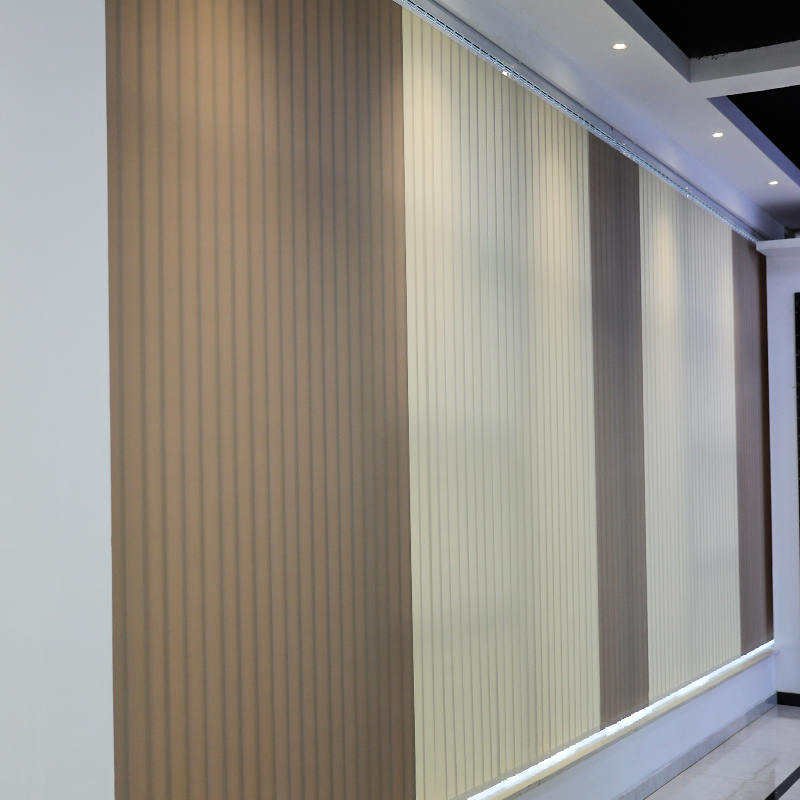
Vertical fabric blinds are one of the most practical and widely installed window covering solutions for large windows, patio doors, and office spaces — offering light control, privacy, and a softer aesthetic than rigid PVC or aluminum alternatives. Yet they are also among the most frequently damaged window treatments in daily use, and the slats themselves are the element that most commonly needs attention. Whether a slat has snapped from its carrier, warped from sun exposure, yellowed with age, or lost the chain weight that keeps it hanging straight, most vertical fabric blind problems are fixable without replacing the entire headrail — provided you understand how the system is constructed and what is actually failing. This article covers the main types of vertical fabric blind slats, how the carrier system works, the most common problems and their practical solutions, and how to source the right replacement slats when repairs are needed.
A vertical blind slat — also called a vane or louvre — is a long, narrow strip of fabric, typically between 89 mm and 127 mm wide and cut to the drop height required for the specific window. The fabric used is usually a stiffened woven or nonwoven textile, available in varying degrees of opacity from sheer to blackout, and treated with a backing or stiffening compound that gives the slat enough body to hang vertically without buckling or curling while still being light enough to rotate freely when the blind is operated.
At the top of each slat, a hole is punched or a plastic clip insert is bonded into the fabric to create the connection point with the carrier in the headrail. At the bottom, a small weighted chain or bottom weight is threaded through a chain pocket sewn along the lower edge of each slat. This weight serves a critical function — it keeps the slat hanging plumb and prevents it from billowing out of alignment in air currents. Without the bottom weight, fabric slats fold, bow outward, and fail to rotate cleanly when the blind is turned. The chain links the bottom of all slats together, preventing individual slats from swinging independently and maintaining an even lower edge alignment across the full width of the blind.
Vertical fabric blind slats are not a single standardized product — they vary in fabric type, opacity, heading style, and carrier compatibility in ways that determine both their visual and functional performance. Understanding the main categories helps when both selecting new slats and sourcing replacements for existing systems.
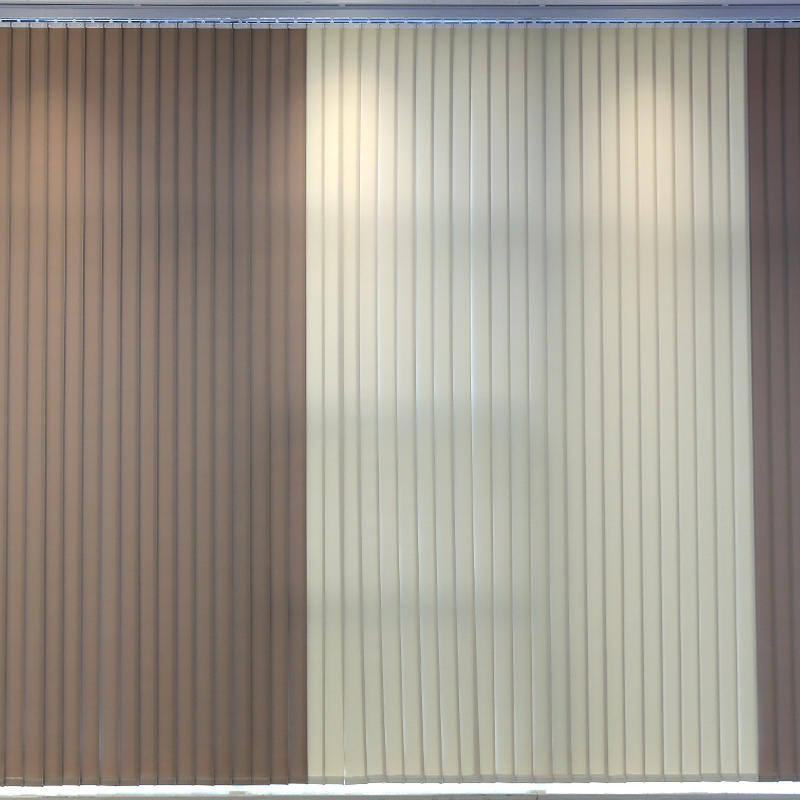
Sheer and voile fabric slats allow diffused light to pass through while providing partial privacy — they soften direct sunlight without blocking daylight and are popular in living rooms and offices where glare reduction matters but a bright interior is preferred. Dimout fabric slats block 70 to 90% of incoming light, providing substantial privacy and glare reduction while allowing some soft ambient light to filter through — the most common specification for residential bedrooms and meeting rooms. Blackout fabric slats are laminated with a light-blocking interlining and block effectively 99% or more of incoming light, making them appropriate for media rooms, shift workers' bedrooms, and any space requiring complete light exclusion. Textured woven fabric slats add tactile interest and a more premium appearance than flat fabric but may be slightly more prone to dust retention in their surface texture. PVC-backed fabric slats — where a polyester or synthetic fabric face is laminated to a PVC backing for additional stiffness and moisture resistance — are the most durable and easiest to wipe clean, making them the standard specification for kitchens, bathrooms, and commercial spaces.
The heading — the top section of the slat that connects to the carrier in the headrail — comes in two main configurations that must match the carrier system in the headrail for the blind to function. Stem-insert slats have a rectangular aperture at the top into which a plastic stem (the rotating nib from the carrier) inserts, allowing the slat to pivot when the blind rotates. Hook-type slats use a separate plastic hook clip that slides into the top of the fabric slat and then clips onto the carrier below the headrail. The hook type is common in older blind systems and allows for very easy individual slat removal and replacement without tools. Both systems are available from replacement parts suppliers, but the two types are not interchangeable — confirm your headrail carrier type before ordering replacement slats.
Vertical fabric blind problems fall into a predictable set of categories that account for the vast majority of reported failures. Identifying which failure mode you are dealing with is the first step toward an efficient repair.
| Problem | Most Likely Cause | Solution Type |
| Slat falls off when blind is operated | Broken carrier hook or stem insert | Replace carrier or hook clip |
| Slat hangs at wrong angle | Carrier not rotating; stem broken | Replace or refit carrier stem |
| Slat billows or bows outward | Missing or broken bottom weight chain | Rethread or replace chain weight |
| Top hole torn through | Overstressed by forced operation | Reinforce with eyelet or replace slat |
| Slat yellowed or faded | UV degradation over time | Replace affected slats |
| Slats bunch at one end | Broken cord or spacer chain | Repair or replace spacer chain |
| One slat won't rotate with others | Disconnected from rotation gear | Refit stem into carrier slot |
Most vertical fabric blind slat repairs can be completed without specialist tools and without removing the headrail from the wall. The key is correctly identifying the specific failure before attempting a repair, since applying the wrong fix to the wrong problem wastes time and may cause additional damage.
When a slat falls free from the headrail, the first step is to determine whether the problem is with the slat's heading or with the carrier in the headrail. Hold the top of the slat and examine the heading hole or clip area — if the hole is intact and the hook clip (if present) is undamaged, the problem is likely a broken or worn carrier in the headrail. Look up into the headrail at the carrier from which the slat fell — on a hook-type system, the carrier hook may have snapped; on a stem-type system, the rotating stem nib may have broken off or become disengaged from the rotation gear. Replacement carriers are widely available from blind parts suppliers and are sold individually — take the broken carrier to a hardware store or photograph it for online ordering to match the correct replacement. Fitting a new carrier typically requires sliding the old carrier out of the headrail channel from one end, inserting the new carrier in the same position, and rehanging the slat.
A slat that bows outward or swings freely without staying plumb has almost always lost its bottom weight chain. The chain weight is threaded through a pocket sewn or sealed along the bottom hem of the fabric. To inspect the chain, feel along the bottom hem — a functioning chain pocket contains a series of linked metal beads running the full width of the slat. If the pocket has opened at one end or the chain has broken, the slat will behave erratically. To rethread a replacement chain weight: use a safety pin or thin wire to feed the new beaded chain weight into the open end of the hem pocket from one side, drawing it through until it emerges from the other side. Seal the open end of the pocket using iron-on hem tape if the original stitching has come undone. Replacement chain weights for standard 89 mm vertical blind slats are sold in bulk rolls from blind parts suppliers and are cut to the exact slat width required.
When the top hole of a fabric slat has torn through — typically caused by the slat being pulled or forced rather than being operated correctly through the control cord — the slat loses its secure connection to the carrier and will fall repeatedly even if reattached. For a minor tear that has not yet fully extended to the edge of the slat, a self-adhesive reinforcement eyelet — a metal or plastic eyelet ring with peel-and-stick backing — can be applied to both faces of the fabric around the torn hole, effectively reinforcing the connection point and preventing further tearing. These eyelets are available in 9 mm and 12 mm sizes to suit standard slat hole diameters. If the tear has already extended to the edge of the slat or if the fabric has degraded significantly around the hole, the slat should be replaced rather than repaired — a reinforcement eyelet on structurally compromised fabric will simply pull through again.
When all slats bunch at one end of the headrail rather than spacing evenly across the window, the spacer chain — the linking chain that runs along the bottom of the slats and connects them to maintain equal spacing when the blind is opened or closed — has either broken or become disconnected. Inspect the bottom spacer chain by looking along the bottom edge of all slats when the blind is in the open (stacked) position. If you find a gap in the chain run, reconnect the chain loops using a replacement S-hook or small connecting link available from blind hardware suppliers. If the chain has broken mid-length, the entire spacer chain may need replacement — feed the new chain through the bottom hooks of all slats in sequence and connect the ends to the leading and trailing edges of the blind run. This repair requires patience but no specialist tools, and replacement spacer chain is sold in standard bead spacings matched to 89 mm slat systems.
Some slat problems — yellowing, severe fading, persistent warp, heat-set creasing from prolonged sun exposure, or staining that cannot be cleaned — require full slat replacement rather than repair. Replacing individual slats or a complete set of slats while retaining the existing headrail is a cost-effective approach that avoids the expense and installation effort of a complete blind replacement. The following guidance covers how to source and fit replacement slats correctly.
Before ordering replacement slats, measure the width and drop of the existing slats with a tape measure. Standard vertical blind slat widths are 89 mm (the most common residential width) and 127 mm (wider slat used on larger windows and patio doors). The drop measurement is the length of the slat from the top heading hole to the bottom edge — measure an existing undamaged slat for accuracy rather than measuring the window opening, since the drop is determined by the headrail installation height and desired clearance above floor level. Also note the heading type — hole-insert or hook-clip — by examining the top of an existing slat, and confirm whether the bottom pocket chain uses standard 4.5 mm bead chain or a different weight specification.
For hook-clip systems, fitting a replacement slat is straightforward: slide a new hook clip into the top of the fabric slat (if the replacement slat does not include a pre-fitted clip), then hook the clip onto the carrier stem below the headrail with the flat face of the slat facing the room. Ensure the clip is fully engaged — it should click into place and resist light downward pull without disengaging. For stem-insert systems, align the top hole of the slat with the rotating stem nib on the carrier and press upward and inward until the stem engages the hole fully. Test the slat's rotation by manually turning the headrail control — the slat should rotate smoothly with all other slats in unison. If the new slat resists rotation or hangs at a different angle from its neighbors, the stem is not fully seated in the heading hole.
Most vertical fabric blind slat failures are caused by incorrect operation rather than material defect, and a few straightforward habits eliminate the majority of preventable damage.
Vertical fabric blind slats are among the most repairable window covering components available — the system's design deliberately allows individual slats, carriers, chain weights, and spacer chains to be addressed independently without the need to remove the headrail or replace the entire blind. Approaching slat problems with a clear understanding of the failure mechanism, the correct repair technique for that specific failure, and the right replacement parts sourced to match the existing system turns what appears to be a replacement job into a straightforward DIY repair that restores the blind to full function at a fraction of the cost of a new installation.